Can You Do Your Own Restaurant Accounting?
You can do your own restaurant accounting if your operation is small, simple, and backed by strong weekly systems. It becomes risky when sales channels, tips, payroll, inventory, delivery apps, taxes, or locations grow. At that point, errors can hurt margins, compliance, and owner time.
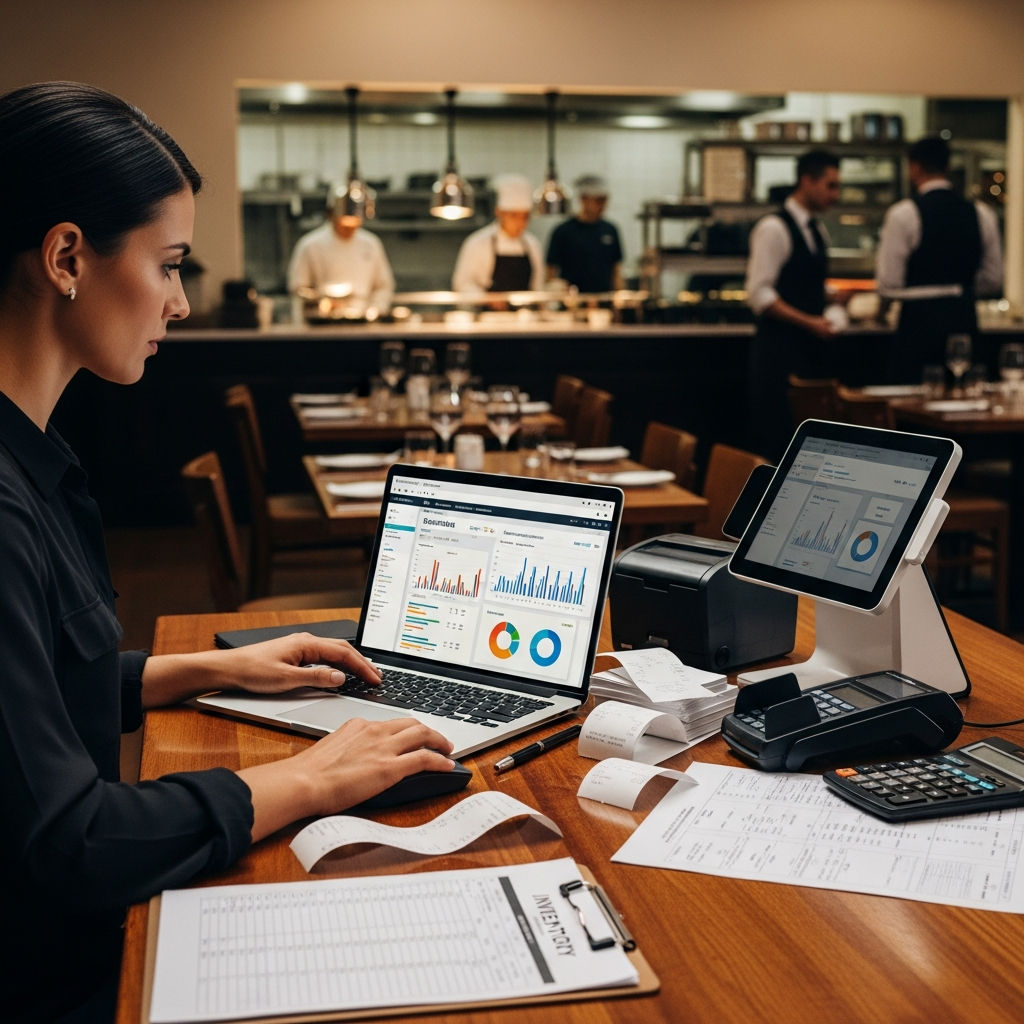
You can do your own restaurant accounting if your operation is small, simple, and backed by strong weekly systems. It becomes risky when sales channels, tips, payroll, inventory, delivery apps, taxes, or locations grow. At that point, errors can hurt margins, compliance, and owner time.
Restaurant owners often ask whether they can handle their own accounting, and the honest answer is: sometimes, but only with the right systems, discipline, and risk tolerance. Restaurant accounting is different from ordinary small-business bookkeeping because daily sales, tips, payroll, inventory, third-party delivery deposits, sales tax, and food cost all have to reconcile accurately.
This article explains when DIY restaurant accounting can work, where it commonly fails, how technology integrations affect accuracy, and when outsourcing to a restaurant-focused accounting partner such as FORCS may protect margins, compliance, and owner time.
Why is Restaurant Accounting Harder than Regular Bookkeeping?
Restaurant accounting is harder because sales, tips, taxes, payroll, inventory, delivery payouts, discounts, refunds, and gift cards all affect the books. A small mapping or timing error can make revenue, labor cost, cash, and tax reports wrong. There is lots of data that changes daily.
Yes, you can do your own restaurant accounting, but only for a very small, simple operation, and only if you can keep reconciliations, payroll, taxes, and reporting consistently accurate week after week.
Restaurant books get harder than “regular bookkeeping” because revenue is split across daily cash and card batches, multiple order channels, and non-revenue items that still affect the ledger. Those channels include dine-in, takeout, catering, delivery apps, tips, discounts, comps, voids, refunds, gift cards, and sales tax.
If POS categories are not mapped correctly, small errors can quietly distort the numbers. Common examples include recording tips as revenue or netting sales tax into sales. These errors can affect revenue, liabilities, labor cost, and taxable sales.
Restaurants also need management accounting, not only historical bookkeeping. COGS and food or beverage cost percentages depend on accurate inventory and purchase classification. Labor cost must reflect tipped wages and scheduling. Prime cost, which is food plus labor, is the core efficiency signal owners use for pricing, purchasing, and staffing decisions.
From 2024 through 2026, that discipline matters more because operators face persistent cost increases while managing more systems and automation needs. Cloud and POS integrations can also add more moving parts when they are not managed carefully.
The real question is not whether DIY is possible. It is whether you have the tools, time, and controls to do it right every week.
What Tools, Controls, and Mistakes Matter for DIY Restaurant Accounting?
DIY restaurant accounting works only when it becomes a routine. You need daily POS closeouts, weekly payout and payroll checks, monthly inventory and reconciliations, clean document storage, and owner review of prime cost, cash, food cost, and labor cost.
DIY restaurant accounting works only as a repeatable operating rhythm. Every day, you close the POS, reconcile cash and expected deposits, and file the “day packet.” That packet should include the close report, tips, refunds, voids, and paid-outs so it can be matched to the bank deposit later.
Weekly, you match POS batches and delivery-app payouts to bank activity while noting commissions and adjustments. You also run payroll with tip capture that follows IRS tip recordkeeping and reporting rules.
Month-end means a structured close. This includes AP entry, inventory adjustments, full bank and credit-card reconciliations, and a financial review. The goal is a P&L that is ready for decisions, not one that is “eventually correct”.
Your minimum stack should include:
- POS system
- Cloud accounting with bank-feed matching, R365
- Payroll and timekeeping
- Inventory and recipe costing
- Bill pay
- Document storage
- KPI dashboard
Exports are not enough unless categories are mapped correctly. Tax, tips, service charges, discounts, refunds, and gift cards must land in the right accounts.
Common DIY failures include treating service charges as tips, even though service charges are wages for payroll tax purposes. Another common issue is recognizing gift cards as immediate revenue instead of a liability until redemption. Skipping delivery payout reconciliation can also hide fees, adjustments, missed deposits, and timing differences.
Practical controls include a daily close checklist, weekly payroll review, monthly inventory counts, restricted access, and a recurring owner review of prime cost and cash.
Where does Restaurant Accounting Break Down, and when should you Hire Help?
Restaurant accounting often breaks down when systems do not match, payroll needs corrections, inventory is unreliable, tax rules get more complex, or financial reports arrive late. Hire help when the numbers are no longer trusted enough to run the business.
Most restaurant accounting failures come from small errors that build over time. Disconnected systems, repeated miscategorizations, and delayed reporting can make the books unreliable. When POS, scheduling, payroll, banking, inventory, delivery apps, and the general ledger do not reconcile cleanly, teams often fall back to manual exports and re-entry.
Restaurant365 describes that manual work as an “error-prone, time-consuming process” that can create duplicate data, missed deposits, and unreliable labor and margin reporting. Operators also lose profit signals when tools do not communicate, which can lead to mismatched payroll, inaccurate inventory counts, and reporting gaps that hide leakage until month-end.
Payroll and tip compliance is the second major break point because the rules are technical and penalties are real. The FLSA distinguishes tips from mandatory service charges, and service charges are wages that must be handled in minimum wage and overtime calculations.
On the tax side, the IRS states that “All tips you receive are income and are subject to federal income tax.” Failures to report can trigger a 50% penalty on the payroll taxes due on unreported tips.
Inventory and recipe costing breaks down when item mapping, counts, and vendor price changes are not maintained. When that happens, theoretical food cost and actual food cost diverge, and menu profitability decisions become guesswork rather than measurement. FORCS restaurant accounting has experienced accounting and operations teams to ensure your accounting and inventory stay clean.
Sales tax becomes fragile as soon as you add delivery, catering, alcohol, or multiple jurisdictions because taxability and sourcing rules can change across state and local lines. State-specific tests, such as California’s “80-80 rule,” can also change how sales are treated.
Weak cash controls also raise fraud risk. CPA guidance points to POS void reports and tighter close routines as ways to detect abnormal patterns early. Bank guidance also recommends vendor verification and back-office safeguards as automation increases exposure.
Hire specialist help when you see recurring payroll corrections, unexplained cash or inventory variance, tax notices, chronically late financials, multi-unit complexity, or prime cost that is not trustworthy enough to run the business. The right level may be a part-time bookkeeper, restaurant specialist accountant, fractional controller, CPA tax support, or a full-service accounting and operations partner.
Evaluate cost against owner hours recovered, penalties avoided, faster close, and improved margin control—not hourly rate alone.
How should you Evaluate FORCS and Other Restaurant Accounting Partners?
Evaluate restaurant accounting partners by how well they turn POS, payroll, inventory, and accounting data into timely operating decisions. Ask about integrations, category mapping, tip compliance, close speed, dashboards, access controls, references, cleanup work, and controller-level support.
When you evaluate an outsourced restaurant accounting partner, look for a team that can turn POS, payroll, inventory, and general-ledger data into timely operating decisions, not only clean bookkeeping.
FORCS is a restaurant-focused accounting and operations partner offering bookkeeping, payroll and HR support, tax and CPA coordination, operations help for items, recipes, inventory, and automation or integrations. Clutch also lists a reported hourly range of $50–$149. Confirm current retainers, packages, and scope directly, and request case studies and measurable outcomes rather than assuming packaged pricing or ROI guarantees.
For any provider, including FORCS, ask which POS, payroll, inventory, and accounting tools they integrate. FORCS cites Restaurant365, Toast, and Brink. Also ask how they map POS categories to the GL, how tip compliance is handled, typical month-end close speed, which dashboards and KPIs they deliver, data-access controls, and references from your restaurant type.
Push for before-and-after proof, such as fewer payroll errors, faster close, and lower variance. Confirm whether you will receive controller or CFO-level guidance when needed.
A practical migration roadmap may include:
- Discovery
- Access setup
- Historical cleanup
- Chart-of-accounts setup
- POS and payroll mapping
- First-month reconciliation
- Dashboard setup
- Manager training
- 60- to 90-day stabilization
After go-live, track close time, payroll accuracy, cash and inventory variance, prime cost, food cost, labor cost, sales-tax accuracy, and owner hours saved. The right partner makes data faster, cleaner, and useful for operations, not merely “done” at month-end.
What is the Bottom Line on DIY Restaurant Accounting?
DIY restaurant accounting can work for a small, simple restaurant with clean systems and steady owner review. As payroll, sales channels, inventory, tax needs, or locations grow, the hidden cost of errors can exceed the savings.
DIY restaurant accounting can be a practical starting point for a small, simple operation with clean systems, limited payroll complexity, and an owner who reviews financials consistently. However, as sales channels, staff, locations, inventory, and compliance obligations grow, the hidden cost of errors often exceeds the apparent savings.
The best decision is not based only on bookkeeping price. It should also account for risk, reporting speed, operational insight, and owner capacity. Restaurants should use strong controls, automate integrations wherever possible, and consider a specialist partner when payroll, tax, inventory, or profitability analysis becomes too complex to manage reliably in-house.
For assistance or support with R365 implementations, Automations, menu engineering, restaurant accounting, inventories and recipes, HR & Payroll, Taxes, Compliance, or other accounting related tasks in your restaurant locations, contact FORCS. They are experts in R365 and professional Accounting and Operations Support!
Sources
- Altametrics - The Ultimate Daily Checklist for Restaurant Owners (Accessed April 26, 2026)
- Baker Tilly - Balancing Act: How to Account for Restaurant Gift Cards (Accessed April 26, 2026)
- Bank of America - Restaurant Fraud Prevention (Accessed April 26, 2026)
- BEP Back Office - Disconnected Software Is Costing Your Restaurant More Than You Think (Accessed April 26, 2026)
- California CDTFA - Tax Guide for Restaurant Owners: Industry Topics (Accessed April 26, 2026)
- Clutch - FORCS, LLC Services and Company Info (Accessed April 26, 2026)
- GBQ - Protect Your Business From Restaurant and Store Fraud (Accessed April 26, 2026)
- Gravitate Digital - Accounting for Restaurants (Accessed April 26, 2026)
- HRP - IRS Explains Differences Between Tips and Service Charges (Accessed April 26, 2026)
- Intuit QuickBooks - Match Online Bank Transactions in QuickBooks Online (Accessed April 26, 2026)
- IRS - Publication 531: Reporting Tip Income (Accessed April 26, 2026)
- IRS - Tip Recordkeeping and Reporting (Accessed April 26, 2026)
- LarkSuite - Restaurant Accounting (Accessed April 26, 2026)
- Modern Restaurant Management - Do You Deliver? State and Local Tax Consideration for Restaurants (Accessed April 26, 2026)
- National Restaurant Association - Persistent Cost Increases and Demand Will Shape the Restaurant Industry in 2026 (Accessed April 26, 2026)
- Pacific Accounting & Business Services - Restaurant Accounting: AI, Cloud, and Automation (Accessed April 26, 2026)
- Paperchase - Why You Can’t Ignore Outsourced Accounting Services for Restaurant Franchises (Accessed April 26, 2026)
- Profitwise Online - Daily, Weekly, and Monthly Bookkeeping Tasks for Restaurants (Accessed April 26, 2026)
- Restaurant CFO Partners - CFO Solutions for the Restaurant Industry (Accessed April 26, 2026)
- Restaurant365 - Intercompany Accounting (Accessed April 26, 2026)
- Restaurant365 - Daily, Weekly, Monthly, and Quarterly Tasks for Accounting and Operations (Accessed April 26, 2026)
- Shore Source Biz - Weekly Bookkeeping Checklist for Restaurant Owners (Accessed April 26, 2026)
- Sound Advice Bookkeeping - Bookkeeping for Restaurants (Accessed April 26, 2026)
- The Fork CPAs - Accounting for Restaurateurs (Accessed April 26, 2026)
- TRIS - Outsourced Restaurant Accounting (Accessed April 26, 2026)
- U.S. Department of Labor - Fact Sheet #15: Tipped Employees Under the FLSA (Accessed April 26, 2026)