
NYC Commercial Rent Tax for Restaurants in Manhattan: CRT Rules, Calculations, and Compliance
The New York City Commercial Rent Tax (CRT) can be a hidden cost driver for restaurants leasing space in Manhattan below East/West 96th Street . Although the statutory CRT rate is 6% of “base rent” , NYC provides a standard 35% base-rent reduction , often discussed as an effective 3.9% rate. Since 2
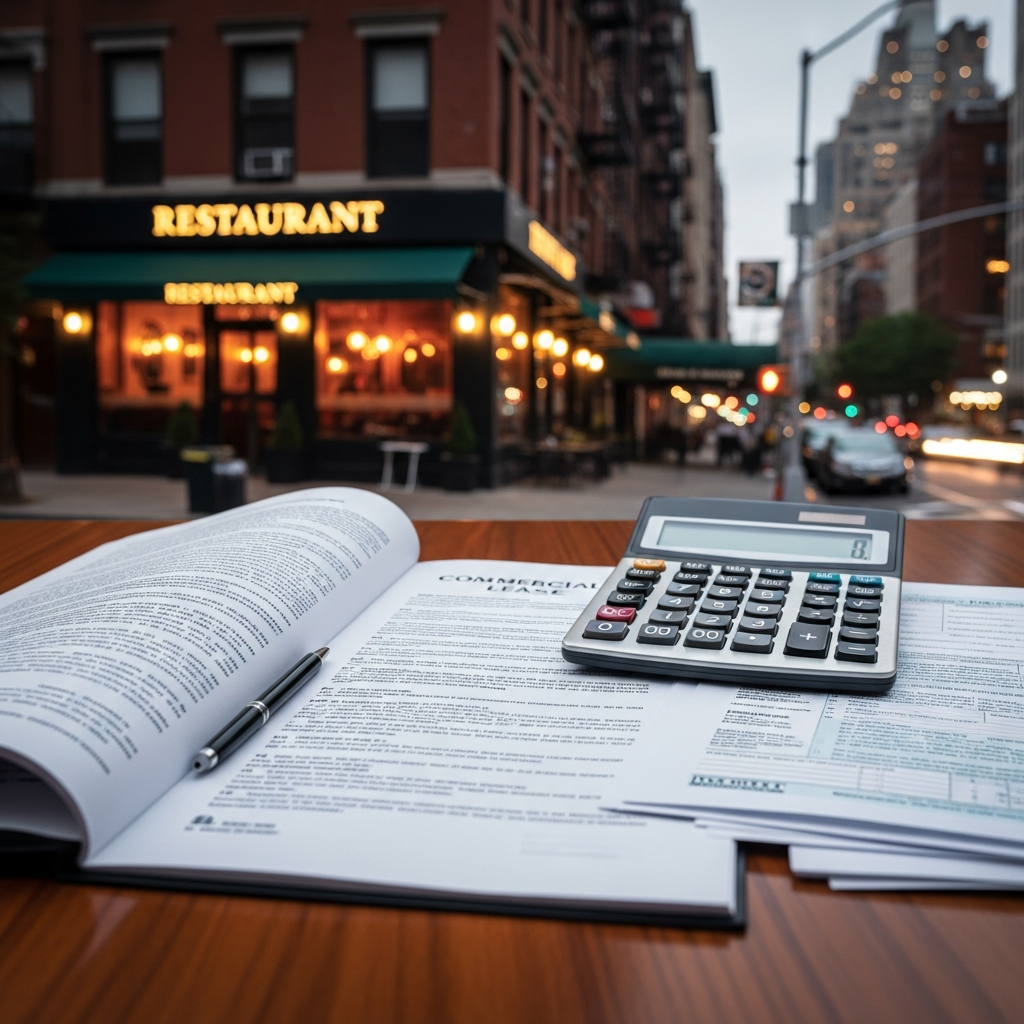
The New York City Commercial Rent Tax (CRT) can be a hidden cost driver for restaurants leasing space in Manhattan below East/West 96th Street. Although the statutory CRT rate is 6% of “base rent”, NYC provides a standard 35% base-rent reduction, often discussed as an effective 3.9% rate. Since 2018, small-business credits and income-based phaseouts have dramatically reduced CRT for many smaller operators, while high-rent flagship locations can still face meaningful liabilities. This article explains how CRT applies to real restaurant leases, how to calculate exposure, and how to build compliance and negotiation workflows that protect cash flow.
What does NYC Commercial Rent Tax mean for restaurants in Manhattan?
NYC Commercial Rent Tax is a tenant-paid tax on commercial occupancy in Manhattan south of 96th Street. For restaurants, it can directly affect occupancy costs, quarterly cash flow, and store-level EBITDA when taxable rent reaches the relevant thresholds.
NYC Commercial Rent Tax (CRT) is a tenant-paid tax administered by the New York City Department of Finance on the privilege of occupying commercial space in the CRT zone—making it a direct restaurant occupancy cost that can materially affect store-level EBITDA and quarterly cash flow planning. For Manhattan restaurants, the practical question is not “do we own real estate?” but “are we paying taxable rent, and rent-like charges, for space below 96th Street?”.
The CRT zone is Manhattan south of the center line of East/West 96th Street. Edge cases should be analyzed by where the demised premises you occupy are located, not where guests enter. For example, a mixed-use tower with multiple entrances still generally follows the leased premises’ address/location and the commercial occupancy arrangement, whether lease, sublease, license, or concession.
Core mechanics: CRT is imposed at a statutory 6% rate on “base rent,” and the standard 35% base-rent reduction drives the commonly cited ~3.9% effective rate (6% × 65%). CRT liability generally starts when annualized base rent, before the 35% reduction, reaches $250,000, so restaurants near the line should still model CRT because step-ups, CPI escalators, and percentage-rent provisions can push them over mid-year.
Planning from 2018 through 2026 is different: small-business relief introduced in 2018 can fully offset CRT for many tenants with ≤$5 million in “total income” and ≤$500,000 in base rent, with phaseouts up to $10 million in income and $550,000 in base rent. As a result, some restaurants that used to pay now owe less or none, while high-rent flagships can still face meaningful Manhattan restaurant lease tax exposure.
Restaurant-specific relevance: post-pandemic restructures, including more percentage rent, shorter terms, and concession-style food hall deals, plus rising operating costs and aggressive rent escalators, change the “NYC commercial rent tax base rent” profile. Multi-location operators can see CRT swing sharply as soon as one Manhattan unit crosses thresholds.
Do restaurants pay CRT?
Yes. Restaurants generally pay CRT if they occupy commercial space in Manhattan south of 96th Street and their annualized base rent reaches the applicable filing or tax thresholds. CRT is imposed at the tenant level, not the owner level.
Yes—if they occupy commercial space in Manhattan south of 96th Street and their annualized base rent reaches the filing or tax thresholds; CRT is tenant-level, not owner-level.
Is CRT based on gross rent or base rent?
CRT is based on base rent, which is a statutory tax measure derived from what the tenant pays for occupancy. It is not simply the lease’s headline rent amount and may include certain rent-like charges.
CRT is computed on “base rent,” a statutory measure derived from what the tenant pays, not simply the headline rent line in the lease.
Does the 35% reduction apply automatically?
Yes. CRT calculations include a standard 35% reduction in base rent before applying the 6% tax rate, which is why the tax is often described as having an effective rate of about 3.9%.
Yes—the CRT computation includes a standard 35% reduction in base rent as part of the formula, which is why the effective rate is often described as ~3.9%.
What is the key Manhattan boundary for CRT?
The CRT zone covers Manhattan below the center line of East and West 96th Street. If the leased premises are inside that boundary, the tenant should analyze whether the occupancy and rent create CRT exposure.
The CRT zone is Manhattan below the center line of 96th Street, East and West.
How do you read a restaurant lease like a tax return for CRT base rent?
To determine CRT base rent, review the lease as a tax document. Start with all amounts paid for occupancy, then apply statutory inclusions and exclusions to identify what counts as base rent before the 35% reduction is applied.
For NYC commercial rent tax base-rent work, treat your lease like a CRT data model: start with everything you pay, or must pay, for the right to occupy or use the space, then apply the Department of Finance’s statutory inclusions and exclusions to arrive at “base rent.” The separate 35% reduction happens later and is not a lease-classification issue. CRT “rent” is intentionally broad and can include amounts you pay on the landlord’s behalf, such as real estate tax escalations, water and sewer charges, and insurance, when the lease makes them your responsibility. For percentage rent, include sales-based rent when it becomes paid or required to be paid; keep POS reports, breakpoint schedules, and year-end reconciliations because NYC caps the gross-receipts-measured portion at 15% of gross receipts for CRT purposes.
NNN and pass-throughs are where Manhattan restaurant lease tax errors often happen. Label each charge by the lease clause and invoice. Some “operating expense” bundles behave like rent if they are effectively landlord obligations shifted to you; the Department of Finance directs taxpayers to follow the form instructions line by line and retain supporting documentation. Subleases and concessions can reduce exposure because subtenant rent can be deductible in computing base rent, but documentation must tie subtenant payments to the same premises. In food halls and shared spaces, identify the taxpayer by contract: (1) signed lease = tenant; (2) license or concession = analyze whether the fee is consideration for occupancy; (3) bundled service fees should be unbundled to the extent they are actually rent-like occupancy charges.
| Lease line item | Accounting GL | CRT treatment | Documentation needed |
|---|---|---|---|
| Minimum rent/step-ups/CPI | Rent expense | Include in gross rent → base rent | Lease rent schedule + amendments |
| Percentage rent | Rent expense | Include when due; apply 15% gross-receipts cap rule | POS sales, breakpoint calculation, reconciliation |
| RE tax escalation/insurance/water | Additional rent | Often includable as rent if paid on landlord’s behalf | Escalation statements, tax bills, invoices |
| CAM/operating expense | Occupancy/OE | Fact-specific; map to clause and Department of Finance instruction treatment | CAM detail, reconciliation backup |
| Key money/TI reimbursements/free rent | Lease incentives | Common misclassifications; verify per instructions and deal documents | Side letters, construction/TI agreements |
| Subtenant rent received | Sublease income | Potential deduction against same-premises base rent | Sublease, invoices, proof of receipt |
Landlord/manager document request checklist: fully executed lease and all riders or side letters; rent schedule and escalation letters; annual or quarterly tax escalation and insurance statements; CAM reconciliation and line-item detail; utility billing methodology, whether direct meter or submeter; percentage-rent reconciliation package; sublease or license agreements and payment ledger.
How do you calculate NYC CRT step by step for a restaurant?
To calculate CRT, confirm the premises are in the zone, determine annualized base rent, apply the 35% reduction, multiply by 6%, and then test whether any small-business credit or phaseout reduces the final liability.
- Confirm the space is in the CRT zone, meaning Manhattan south of the center line of 96th Street, and identify the tenant that occupies or uses the premises under the lease.
- Compute annualized rent for the tax year, June 1 through May 31. If the restaurant opens mid-year, closes, or signs an amendment or rent holiday, annualize the rent actually paid or required for the covered period as instructed on CR-Q and CR-A. Annualization drives bracket and credit eligibility.
- Determine gross rent paid or required and adjust to “base rent” under Department of Finance rules, including netting subtenant rent where applicable.
- Compute tentative CRT: apply the universal 35% base-rent reduction, then the 6% tax rate, for an effective 3.9% rate (6% × 65%).
- Apply the small-business credit or phaseout, effective June 1, 2018. Full relief generally requires total income ≤ $5 million and annual base rent before reduction < $500,000; phaseouts apply up to $10 million in income and $550,000 in rent. Use the applicable 2025–26 CR-Q instruction worksheet for exact year-specific mechanics.
- Reconcile quarterly filings, due within 20 days after each quarter, to the annual CR-A return due June 20, and plan cash flow accordingly.
- Example A (near threshold): Annualized gross rent = $248,000, which is below the $250,000 CRT threshold, so there is no tax. However, you may still have filing triggers in other scenarios, so confirm against current Department of Finance filing rules.
- Example B ($300,000–$1 million): Base rent before reduction = $600,000 → taxable base = $600,000 × 65% = $390,000; tentative CRT = $390,000 × 6% = $23,400. If total income is $4.8 million, the credit may materially reduce or erase tax; if total income is $9 million, expect only a partial credit under the worksheet factors.
- Example C (>$1 million flagship): Base rent before reduction = $1,500,000 → taxable base = $975,000; tentative CRT = $58,500. The credit is typically unavailable once rent is at least $550,000 or total income is at least $10 million. If a “service fee” is re-drafted as additional rent, that reclassification can change base rent and tax, so model both versions.
- Example D (percentage rent): Fixed rent = $40,000 per month plus 6% of sales over a breakpoint. If one month adds $15,000 of percentage rent, annual base rent increases by $15,000 and may affect credit bands, so tie projections to POS sales and reconciliation language.
Spreadsheet outline: Tabs: (1) Lease terms and dates, (2) monthly rent schedule for fixed, percentage, and other rent, (3) base-rent adjustments, (4) annualization and zone/entity, (5) tentative tax with the 35% reduction and 6% rate, (6) credit worksheet for income and rent factors, and (7) quarterly versus annual reconciliation. An “operator version” should include inputs and a dashboard; an “accountant version” should include line-by-line tie-outs to CR-Q and CR-A. Validation alerts should flag annualization mismatches, double-counted NNN, missing subtenant offsets, crossed credit thresholds, and quarterly totals that do not equal the annual amount.
How should multi-location groups, subleases, and food halls structure CRT efficiently?
Multi-location restaurant groups should model CRT by tenant entity, location, and agreement type. Credit eligibility, subtenant offsets, and shared-space treatment can change materially depending on whether the arrangement is a lease, sublease, license, or concession.
Expansion is where CRT planning stops being “one lease, one return” and becomes an organizational design problem. A single operating entity leasing multiple Manhattan sites south of 96th Street can simplify banking and vendor contracting, but it can also concentrate “total income” at the tenant level, potentially pushing the tenant out of the small-business credit range described in the current Department of Finance instructions. Splitting locations into separate tenant entities can preserve liability walls and, sometimes, credit eligibility, but it increases quarterly filing touchpoints and requires disciplined intercompany documentation.
Groups with mixed geography must prevent blending. CRT is premises-specific and tenant-specific within the Manhattan zone ; track per location the executed agreement, rent schedule, amendments, commencement and termination dates, and the exact tenant name and EIN used to pay rent.
Shared occupancy is common in restaurants, including prep-area sublets, storage sharing, bar pop-ups, and kiosks. CRT’s definition of “tenant” explicitly includes lessees, sublessees, licensees, and concessionaires , and the Department of Finance has signaled substance-over-label scrutiny in shared-space contexts. For food hall operator models, vendors often operate under licenses with base fees plus a percentage of sales; operators should separate true occupancy charges from operational and service fees and retain POS reports supporting percentage rent. Professional commentary on office-sharing similarly reinforces that written agreements, delineated premises, and clear fee allocations drive audit outcomes.
- Growth-stage CRT checklist: (1–2) central lease abstraction and a single rent tie-out; (3–5) entity and credit modeling plus a standardized amendment log; (6–10+) automation, including AP coding and POS-to-percentage-rent feeds, plus a quarterly internal CRT close.
- Sample allocation schedule template: Date; Site; Counterparty; Instrument (lease/sublease/license); Exclusive square feet, if any; Shared-area basis; Fixed fee; Percentage-of-sales rate; Sales period; Calculated percentage fee; Service/marketing fee; CRT-includable amount; Support reference.
- Audit-ready documentation for subleases and concessions: executed contracts and amendments; floor plan or premises sketch; invoices and receipts; bank proof; subtenant or licensee billing; POS sales reports for percentage rent; correspondence establishing term changes.
How do you handle CRT filing compliance and audit readiness?
Build CRT compliance around current Department of Finance forms and instructions. Restaurants should accrue monthly, file quarterly, reconcile annually, and maintain lease, payment, and sales support to defend base-rent calculations and any credits or offsets.
Build CRT compliance around the forms, not memory, because the NYC Department of Finance updates PDFs and workflows by tax year. Use the current instruction set, such as the 2025–26 CR-Q instructions, to confirm quarter coverage, definitions, and where annualization and credits are computed. In general, restaurants file CR-Q quarterly and then true up on the annual CR-A return covering the June-to-May tax year.
Payment workflow (operator-simple): accrue monthly, estimating percentage rent conservatively; pay quarterly; reconcile annually. Journal entry template: Dr CRT expense; Cr CRT payable monthly. On payment: Dr CRT payable; Cr cash. During the quarterly close, tie rent expense in the general ledger to lease invoices, then recompute base rent subject to tax under the quarter’s instructions and adjust the payable.
Underpayment exposure: late filing or payment can trigger penalties and daily compounded interest under NYC rules; reduce exposure by over-accruing when percentage rent is volatile and reversing at true-up.
Restaurant audit hotspots: NNN and pass-through misclassification, missed percentage rent, incorrect annualization after amendments, unsupported subtenant offsets, and undocumented license or food-hall-style arrangements. The Department of Finance publishes audit-procedure statements that telegraph documentation expectations.
Recordkeeping: retain executed leases and amendments, rent schedules, invoices, proof of payment, sales reports supporting percentage rent, subtenant support, and your CRT workpapers. NYC requires keeping leases and records and making them available on request, generally for years beyond the filing period or tenancy.
30-day setup plan:
- COA: separate GL accounts for base rent, NNN, CAM/real estate tax, percentage rent, abatements, and subtenant rent.
- Lease abstraction: one-page “CRT clause map” per site listing taxable rent components and change triggers.
- Monthly tie-out: invoice ↔ payment ↔ GL; update percentage rent from POS.
- CRT model: replicate Department of Finance worksheets; lock assumptions; version-control by tax year.
- Quarterly close checklist: recompute, book true-up, pay, and archive the package.
Systems: integrate POS data for percentage rent, lease administration for rent steps and amendments, and accounting for coded invoices to output CRT-ready rent rolls and variance reports.
Escalate for a formal opinion or Department of Finance outreach when allocations are novel, the dollars are material, or the documents do not match economic substance. Before renewals or new leases, re-check Department of Finance updates and current-year instructions so thresholds, credits, and due dates are not assumed from last year’s PDF set.
What is the main takeaway on NYC CRT for restaurant tenants?
CRT is highly location-specific and lease-specific. Restaurants below 96th Street should model base rent carefully, test eligibility for credits, capture valid offsets, and build quarterly compliance processes so CRT becomes manageable instead of a surprise cost.
CRT is highly location- and fact-specific: it generally targets commercial tenants in Manhattan south of 96th Street with annualized rent at or above key thresholds, applies a 6% tax to base rent, and then layers in the 35% base-rent reduction and, for many restaurants, the post-2018 small-business credit and phaseouts. For restaurant owners and accountants, the biggest wins usually come from (1) correctly defining base rent under the lease, (2) capturing allowed offsets such as subtenant rent treatment where applicable, and (3) building a quarterly compliance routine using NYC Department of Finance instructions and documentation standards. With good modeling and lease language, CRT becomes manageable rather than surprising.
https://www.youtube.com/watch?v=R8ufw7cbX-0
For assistance or support with NYC CRT, R365 implementations, AI automations, menu engineering, Accounting, Operations, HR & Payroll, Taxes, Compliance, or other back office related tasks for your restaurant locations, contact FORCS. They are the experts in R365 and professional Accounting and Operations Support in New York and beyond!